Soundscaping the Office: Why Forward-Thinking Companies Are Replacing Spotify With AI-Generated Ambience
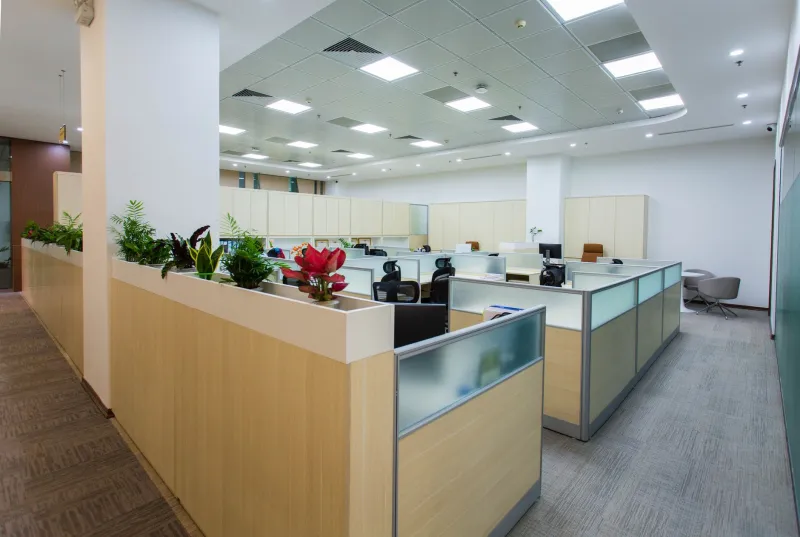
Walk into certain tech offices in Austin, San Francisco, or Brooklyn these days and you might notice something unusual. There's sound — but it doesn't feel like music exactly. It shifts. It breathes. It responds to the time of day, the density of people in the room, maybe even the ambient noise level itself. You can't Shazam it. It doesn't have a drop, a chorus, or a recognizable artist. What you're hearing is generative ambient audio, and it's quietly becoming one of the more interesting workplace design trends nobody's really talking about yet.
For years, the office playlist was the default solution to the open-plan noise problem. Spotify's Focus playlists, lo-fi hip hop streams, Brian Eno's Music for Airports on repeat — these were the tools facilities managers and culture teams reached for. They worked okay. But "okay" is increasingly not good enough for companies that are spending serious money on workplace experience, and a new wave of audio-focused startups and sound designers is stepping in to offer something more intentional.
From Static Playlists to Living Sound Systems
The core distinction between a playlist and a generative soundscape is that one is fixed and one is alive. A playlist loops. A generative system composes in real time, using algorithms — and increasingly, AI — to produce audio that never repeats exactly the same way twice.
Companies like Endel, which started as a consumer wellness app before pivoting toward enterprise clients, and newer players like Moodsonic have been pitching this concept to HR and facilities teams across the country. Their pitch is simple: static music interrupts. Ambient generative audio supports without demanding attention.
"There's a cognitive tax that comes with music that has lyrics, or strong melodic hooks, or unexpected dynamic shifts," explains Marcus Hale, a Brooklyn-based sound designer who has built custom audio environments for three mid-size tech firms in the past two years. "When you're trying to do deep work, your brain keeps getting snagged. Generative ambient systems are specifically engineered to stay below that threshold."
Hale's process involves extensive acoustic mapping of a physical space before a single algorithm is written. Room dimensions, reflective surfaces, HVAC noise — all of it feeds into the design. The result is something that feels almost architectural rather than musical.
The Neuroscience Angle (and Why Offices Are Paying Attention)
Workplace wellness has become a genuine budget line item for companies competing for talent in a post-pandemic labor market, and the science of sound is increasingly part of that conversation. Research from institutions like UC San Diego and Cornell has pointed to the productivity-damaging effects of unpredictable noise in open offices, while studies on "stochastic resonance" and low-frequency sound suggest that certain ambient frequencies can actually enhance neural processing rather than hinder it.
Dr. Priya Nambiar, a cognitive neuroscientist based in Chicago who consults for several workplace design firms, puts it this way: "What ambient audio systems are trying to do is essentially create a consistent acoustic backdrop that masks disruptive noise without introducing new cognitive load. The best ones do that really elegantly. The worst ones just play whale sounds on loop and call it wellness."
The companies investing in this space are clearly betting on the former. Generative systems can be tuned to different frequencies, tempos, and textural densities depending on the time of day or type of work being done — something a playlist fundamentally cannot do.
Sonic Branding Gets Subtle
There's another layer to this trend that's worth pulling apart: the economics of sound as brand identity. A handful of larger corporations — particularly in fintech, healthcare tech, and enterprise SaaS — are starting to think about their office audio environment the way they think about interior design or visual branding. The sound of a space communicates something about a company's values, its culture, the kind of attention it pays to detail.
"We've had clients come to us specifically because they want their office to feel different from every other open-plan startup space," says Jordan Reyes, a partner at a Los Angeles-based sonic branding consultancy. "They want guests, candidates, clients walking in and feeling something specific. Ambient audio is a huge part of that, and it's still relatively underexplored territory."
For companies that are essentially building proprietary soundscapes, there are also intellectual property considerations that didn't exist with a Spotify subscription. Who owns a generative audio system? What happens when the startup that built it gets acquired or shuts down? These are live questions that the industry is only beginning to grapple with.
The Ambient Community's Take
For those of us who've been deep in ambient music culture for years — listening to Grouper at 2am, nerding out over William Basinski's tape loops, trading Bandcamp links in Discord servers — the corporate adoption of generative soundscapes is a complicated thing to process. On one hand, it's validation that the aesthetic and functional power of ambient audio is real and measurable. On the other, there's a mild discomfort in watching something that emerged from experimental, often deeply personal artistic practice get productized into a workplace wellness tool.
But maybe that tension is actually interesting. The ambient community has always existed in this space between art and environment, between music you listen to and music that simply is. The office might just be the next room it drifts into.
For now, if you find yourself sitting in a tech office somewhere and you can't quite figure out what you're hearing, but you feel oddly focused and weirdly calm — you're probably already living inside someone's generative soundscape. Welcome to the ambient workplace.