Sold Out in 90 Seconds: The Secret Economy of Ambient Vinyl Collecting
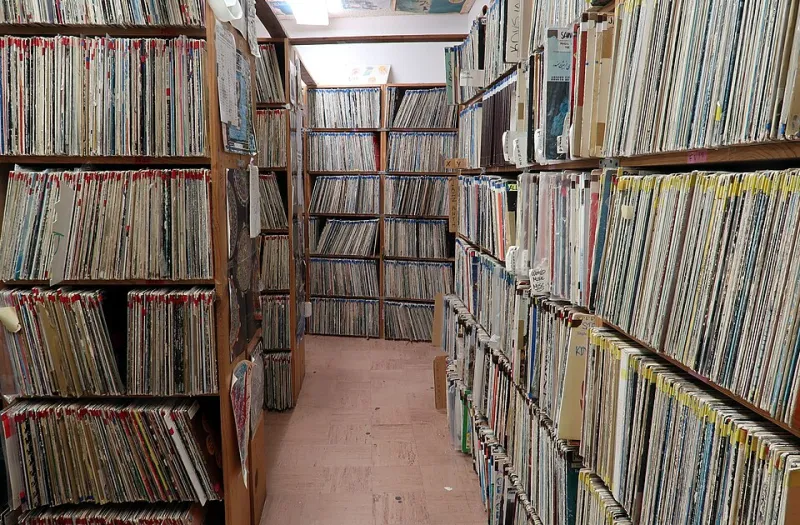
Photo: Melikamp, CC BY-SA 4.0, via Wikimedia Commons
The email lands at 2 p.m. Eastern on a Tuesday. By 2:01, the cart is broken. By 2:02, all 500 copies of a double-LP of glacial synth drones from an artist most of America has never heard of are gone. There's no tour announcement, no radio push, no TikTok dance. Just a label, a pressing, and a community of listeners who've been waiting for this drop like it's a Supreme release.
Welcome to the quietest gold rush in music.
Background Music, Front-of-Mind Prices
Ask anyone outside the niche and they'll tell you ambient music is, by definition, ignorable. That's kind of the point — Brian Eno famously described it as music that should be "as ignorable as it is interesting." What the outsiders don't know is that ignorable has become extremely collectible.
Scan the secondary market and the numbers stop feeling like a hobby and start feeling like an asset class. Early pressings from ambient institutions — think out-of-print catalog work from artists on labels like Editions Mego, Room 40, or the late, great Recital program — routinely trade in the $200 to $600 range. Sealed copies of certain 2010s drone LPs, originally pressed in runs of 300, have crossed four figures. One collector we spoke with, a 38-year-old project manager in Portland who asked to go by "D." to protect his collection's privacy, keeps a spreadsheet tracking his 240-record ambient library like a portfolio. "I've got records I bought for $22 that have appreciated 800 percent," he says. "But honestly? I'd never sell. This is my museum."
That museum mindset is the key to understanding the whole scene. These aren't records being flipped by resellers hoping to catch a meme spike. The people camping label Bandcamp pages at drop time are, overwhelmingly, the same people who will shelve the record, play it once, and then buy the digital download anyway because they don't want to wear out the vinyl.
The Pressing Plant Bottleneck
Here's where it gets logistical. Vinyl manufacturing in the US is a famously backed-up affair, and the ambient boom has collided head-on with that reality. Major-label orders get priority at the big plants, which means small ambient labels — often one or two people operating out of a spare room — are fighting for slots at independent pressing facilities in places like Cleveland, Nashville, and Long Island City.
The workaround has become part of the aesthetic. Short runs of 300 to 500 mean smaller minimum orders, faster turnaround, and a built-in scarcity that fuels the drop culture. Colored wax, lathe cuts, hand-stamped jackets, and one-per-order limits aren't just marketing; they're survival strategies for labels that can't afford unsold inventory sitting in a storage unit.
One Midwest-based label runner described the math bluntly: press 500, sell out in a day, use the revenue to fund the next release. "We're not trying to grow," she told us. "We're trying to stay exactly this size forever." It's a business model that would horrify a venture capitalist and delight basically everyone else involved.
The Fine-Art Framing
Spend enough time in collector Discords and a pattern emerges: the language is borrowed less from record collecting and more from the art world. People talk about "editions," not pressings. They discuss sleeve design, paper stock, and the archival qualities of the vinyl compound. Limited ambient records get displayed — spine-out on dedicated shelving, or framed entirely, since a drone LP you play twice a year is basically a print you can occasionally listen to.
There's a coherent logic to it. Ambient albums tend to be cohesive, long-form statements rather than singles vehicles, which makes the full-album vinyl format genuinely meaningful. The artwork in the scene skews toward minimalism — photography, abstraction, generous negative space — that reads as gallery-adjacent. And the scarcity is real and structural, not manufactured: nobody's going back to press 10,000 copies of a tape-loop record from 2014.
Is the Bubble Going to Burst?
Every boom invites the same question, and the honest answer is: probably not, because the incentives are weirdly stable. Unlike the speculative frenzy that hit mainstream vinyl in the early 2020s, ambient collecting is powered by a self-limiting loop — small runs, devoted audiences, and artists who mostly aren't in it for scale. The risk isn't a crash; it's burnout. Drop fatigue is real, and some collectors admit the thrill of the scramble has started to overshadow the listening.
Which brings us back to the music itself. The best defense of this whole economy is that it forces a behavioral shift: you cannot half-listen while flipping a record, sliding it from the sleeve, and dropping the needle. For two minutes, at least, the background music is the foreground.
In a decade defined by infinite, frictionless, algorithmically served audio, that little ritual — scarce, physical, deliberate — might be the most radical listening experience left. And 500 people at a time are proving they'll pay for it.