Side A, Endless: Why Ambient's Cassette Underground Refuses to Die
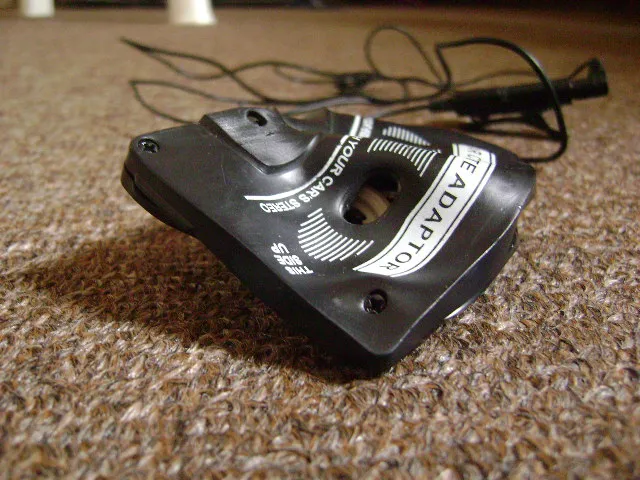
Photo: Andrew A. Shenouda from Riyadh, Saudi Arabia, CC BY 2.0, via Wikimedia Commons
The duplicator in Nathan Bissette's basement runs at real time, which means a hundred-tape run of a forty-minute ambient record takes roughly sixty-seven hours of machine time. He does other things while it runs. He works his day job. He eats dinner. The tape deck keeps going, hissing softly, recording the same album onto the same cassette over and over, and when he comes back down there's a stack of physical objects that didn't exist that morning.
“High-speed duplication sounds like a photocopy,” he says. “Real-time sounds like the master. For drone stuff, you can hear it.”
Bissette runs a small duplication service out of Ohio that most people in this scene would recognize by name even if they've never met him. He's one of maybe a dozen operators in the US currently absorbing the demand from ambient's cassette underground — a scene that by any rational measure should have died around 2009 and instead appears to be having its most sustained run in years.
Fifty copies, no repress
The economics are almost aggressively unambitious. A typical ambient tape release is a run of fifty to a hundred. Colored shells if the label is feeling flush. A j-card printed at home or at a local shop. Sometimes a download code, sometimes just a Bandcamp link written on a slip of paper like a phone number.
Sell-through is fast — a hundred tapes can move in a weekend if the artist has any following at all — and then, usually, that's it. No second pressing. The scarcity isn't a marketing trick, mostly; it's that the label can't afford a second run and doesn't want to store one.
“I've moved four hundred cassettes at most, total, across six years,” says Priya Anand, who runs the Denver-based imprint Marrow Sound. “I've also moved about eleven hundred download codes. The tapes are not the business. The tapes are the reason anyone trusts the business.”
Why the format fits the music
Ask composers why cassette and you get a consistent answer, and it's rarely about nostalgia for a childhood they didn't have.
Tape has a sound. Wow and flutter — tiny, uneven speed variations — smear sustained tones in a way that reads as warmth rather than error. Hiss becomes a floor, a bed, a constant presence that makes the difference between silence and near-silence feel intentional. For music built almost entirely out of sustained tones and low-level texture, these are features, not flaws. A pristine digital file of a forty-minute drone can feel airless. The same piece on a C-42 feels like it's in a room.
The constraint matters too. A cassette side is roughly twenty-two minutes if you want decent fidelity across the whole tape. Ambient composers, who are used to working at whatever length the idea requires, suddenly have to decide what a side is. Some of the best recent work in this scene exists because someone had to make a forty-four-minute statement in two equal halves, and the shape of that decision is audible.
And then there's the loop. Tape loops — lengths of magnetic tape spliced into a circle, run over a machine's heads — have become a genuine subculture, with workshops running in galleries, universities and record stores around the country. You can learn to splice in an afternoon. You can build a piece out of four loops and a mixer and perform it live with no laptop. For a generation of musicians priced out of modular gear, it's the cheapest experimental instrument there is.
The supply chain nobody sees
Behind every edition of fifty is a person sourcing tape stock and shell casings and labels, and that supply chain has been strained for years. Blank cassettes aren't a growth industry. Certain formulations disappear and don't come back. Duplicators describe bidding on lots of old stock, testing them, rejecting half.
“There was a stretch where I was buying sealed cassettes from the eighties off eBay because the modern ones sounded worse,” Bissette says. “I'm not romantic about it. It was a supply problem, not an aesthetic choice.”
Turnaround times stretch to six or eight weeks in busy seasons. Labels learn to plan releases around the duplicator's calendar rather than the other way around, which is why so many ambient tape releases land in clusters — the fall wave, the spring wave.
A scene held together by mail
What the format actually does, beyond sound, is force analog community. A tape is an object that has to be shipped, traded, gifted. The scene runs on mail: swaps, zines stapled and stapled again, hand-written notes tucked into j-cards, tiny distributors operating out of apartments.
It is not a living. Nobody in this article pays rent with cassette sales. Anand works a full-time job in logistics. Bissette's duplication business roughly breaks even after parts and tape stock. The money, such as it is, lives in the download codes and the occasional vinyl run for the handful of names who've broken out.
Which raises the obvious question of why anyone bothers. Bissette has an answer, and it's not the one you'd expect.
“Digital is infinite and therefore free and therefore weightless,” he says. “A hundred tapes is a hundred people who are going to sit with this thing. I know exactly how many exist. I like knowing the number.”
He's got another run going downstairs right now. Sixty-seven hours. He'll come back down tomorrow and there'll be more of them.