Scroll to Chill: How TikTok and Discord Are Accidentally Teaching Gen Z to Love Ambient Sound
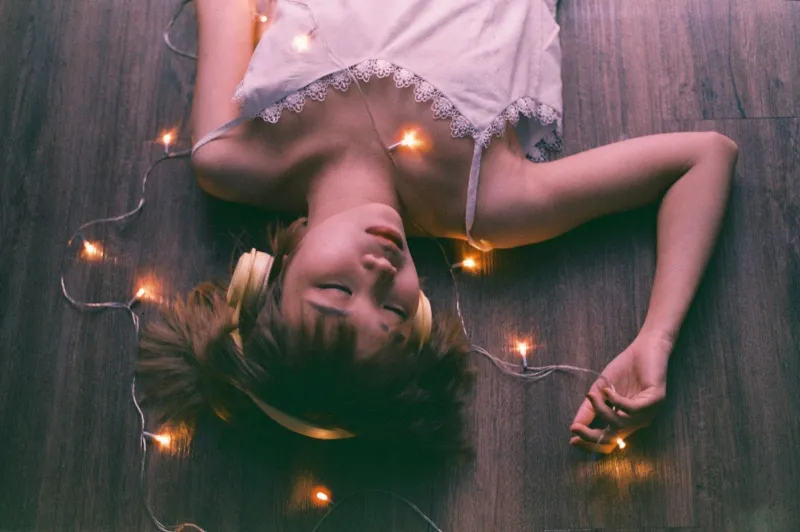
Nobody told Maya Chen, 21, that she was getting into ambient music. She just kept saving TikToks — videos of rain hitting a tent, someone typing in a dimly lit café, a slow pan across a misty forest with a hum underneath that felt almost physical. One day she looked at her saved folder and realized she had three hundred of them.
"I didn't know there was a word for it," she says. "I just knew it made my brain stop yelling at me."
This is how ambient is spreading in 2024 — not through record store recommendations or college radio, but through the sideways logic of short-form video and tight-knit online communities. And the numbers back it up. TikTok searches for terms like "ambient sound," "dark ambience," and "atmospheric music" have grown steadily year over year, often spiking around exam seasons and news cycles. The algorithm, it turns out, is a surprisingly effective ambient music curator.
The Algorithm as A&R
There's something almost poetic about TikTok — a platform engineered for maximum stimulation — becoming a gateway to one of the most anti-stimulation genres in existence. But it makes a weird kind of sense. The same For You Page that serves up chaotic trending audio also learns, fast, when you linger on something slow. Pause on a 45-second clip of Icelandic wind ambience and watch what happens next.
Creators have figured this out. Accounts like @darkforestambience and @voidaudio (names changed) post short atmospheric clips — sometimes just a still image with layered field recordings underneath — and rack up hundreds of thousands of views. The comments sections read less like typical TikTok discourse and more like a collective exhale. "Why does this feel like being understood," one commenter wrote under a drone-heavy clip. It had 14,000 likes.
The creators themselves are often young, self-taught, and working with surprisingly minimal gear. A USB microphone, a free DAW, maybe a Zoom H5 recorder they saved up for. The accessibility is part of the appeal — ambient, more than almost any other genre, doesn't require virtuosity. It rewards patience and ear.
Discord: Where the Real Nerding Out Happens
If TikTok is the front door, Discord is the living room. Servers dedicated to ambient music have exploded in size over the past few years, with some boasting tens of thousands of members. These aren't passive listening spaces — they're active communities where members share obscure Bandcamp finds, debate the differences between dark ambient and drone, and organize real-time listening sessions where everyone hits play at the same time and then types reactions into a chat window.
It sounds niche. It is niche. That's entirely the point.
"There's something about finding a community that's into something specific and weird," says Jordan, 19, a member of several ambient-focused Discord servers. "Like, my friends at school don't really get why I listen to this stuff. But in the server, everyone gets it. We'll spend two hours just talking about reverb."
This kind of community dynamic — small, interest-dense, low-stakes — mirrors the broader appeal of ambient itself. In a media landscape where everything competes for your loudest reaction, these spaces reward a different kind of engagement. You don't have to perform enthusiasm. You can just sit with something.
Why Ambient Hits Different for a Generation on Overdrive
Ask a Gen Z listener why ambient resonates and you'll get answers that sound less like music criticism and more like therapy-speak — which, honestly, tracks. This is a generation that came of age during a pandemic, that has grown up with anxiety disorders normalized as a cultural fact, that checks their phone an average of 96 times a day. The idea that silence — or near-silence, or structured sonic calm — could be a form of relief isn't abstract to them. It's visceral.
"I have ADHD and I used to think I needed music with words to focus," says Priya, 22, who discovered ambient through a YouTube lofi stream and has since gone deep on artists like Stars of the Lid and William Basinski. "But lyrics are just more words. Ambient gives my brain something to hold onto without adding more noise."
This therapeutic framing is worth noting because it shapes how Gen Z talks about the genre — not in terms of artistic lineage or music history, but in terms of function and feeling. Brian Eno's name comes up, but usually because someone Googled "who invented ambient music" after already loving the stuff, not the other way around.
From Passive Listener to Active Creator
Here's what's genuinely exciting for the ambient community: a meaningful chunk of Gen Z listeners aren't stopping at consumption. The same accessibility that makes ambient easy to find makes it relatively easy to make. Apps like GarageBand, Koala Sampler, and even the voice memo app on an iPhone have become entry points. Field recording — capturing the sounds of the world around you — requires nothing more than a decent phone.
TikTok and Discord are full of young creators posting their first experiments: a layered recording of a laundromat at night, a slow drone built from a detuned guitar, rain sounds recorded from a porch in rural Ohio. The feedback loops are tight and encouraging. The community, by and large, is generous.
This is how genres stay alive. Not through institutional preservation but through the messy, organic process of new people finding something old and making it their own. Ambient has always been music for the edges — the edges of sleep, of consciousness, of attention. Turns out it's also music for the edges of a scroll.
Maya still has those three hundred saved TikToks. She's also started recording her own clips — the hum of her apartment building's HVAC, the particular way her neighborhood sounds at 3 a.m. She hasn't posted any of them yet.
"I'm not sure they're for anyone else," she says. "Maybe that's okay."
Maybe that's the most ambient thing of all.