Who Owns the Rain? Inside the Murky Ethics of Selling Nature's Sounds
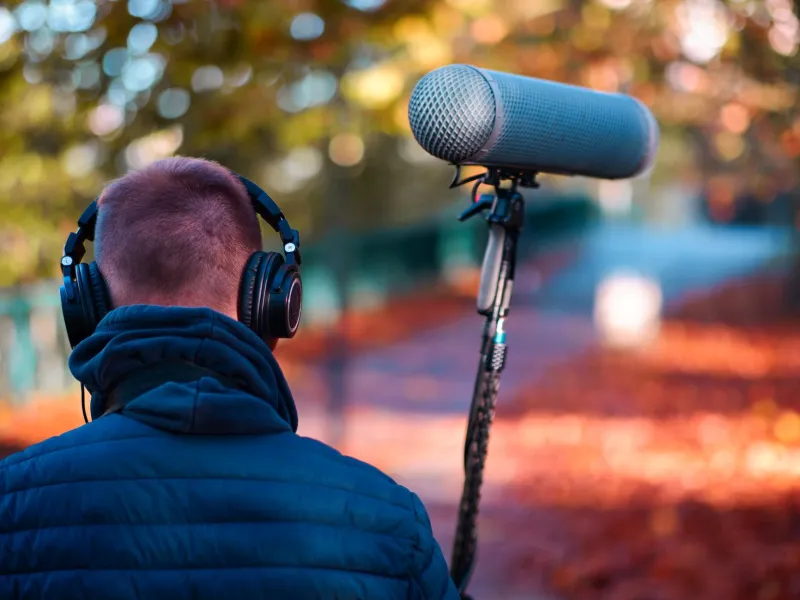
Somewhere in the Boundary Waters Canoe Area Wilderness in northern Minnesota, a recordist named Joel Schreiber is sitting very still. He's been here for three hours. He has a pair of binaural microphones clipped to his ears, a portable recorder in a waterproof case on his lap, and the patience of someone who does this for a living. The loons are calling. The water is doing something remarkable near the rocks to his left. He's getting it all.
Back home, he'll clean up the files, layer a subtle low-frequency drone underneath, and list them on Bandcamp for $7 a download. By ambient music standards, that's a solid release. He'll move a few hundred copies to producers, sound designers, and listeners who use the recordings for sleep, focus, or meditation. Nobody will ask him whether he had permission to record there.
That's the thing. He didn't.
A Legal Grey Zone the Size of the Amazon
Field recording—the practice of capturing real-world environmental audio for artistic or commercial use—occupies one of the stranger legal corners of the creative economy. In most US jurisdictions, recording ambient sound in public spaces is entirely legal. But "public" gets complicated fast.
National parks, for instance, require commercial filming and recording permits. The National Park Service's guidelines make clear that any recording intended for profit, sale, or promotion needs prior authorization. Enforcement, however, is essentially nonexistent for individuals with consumer-grade equipment. The practical reality is that thousands of ambient recordings sold online every year were captured in spaces where the seller had no formal right to do so commercially.
"I know I'm in a grey area," Schreiber admits when reached by phone. "But I also know that what I'm doing is bringing attention to these places. I'm not taking anything away from the wilderness. I'm making a document of it."
That argument—familiar, earnest, and not entirely wrong—is also the exact logic that has made this conversation so difficult to resolve.
The Ambient Producer's Dilemma
For producers who build tracks using purchased field recordings, the ethical chain gets even murkier. When you buy a "rain in old growth forest" sample pack from an independent seller on a platform like Splice or even Gumroad, you're likely not receiving any documentation of where it was recorded, under what conditions, or whether the recordist had rights to commercialize it.
"I've bought packs and later found out the recordist had recorded in a tribal land without any kind of permission or cultural consultation," says Dani Reyes, a Los Angeles-based ambient producer who has been making music under the name Tidepool for six years. "That sits badly with me. But there's no label on the file that tells you."
Reyes now tries to source recordings only from artists who explicitly document their process, a practice she acknowledges is time-consuming and imperfect. "The ambient community talks a lot about slowness and intentionality," she says. "But the economy around it moves fast and asks very few questions."
What About the Sounds Themselves?
Here's where things get philosophically interesting: can a bird's call be owned?
Under US copyright law, the short answer is no—natural sounds are not copyrightable in their raw form. But a recording of those sounds can be. The moment a human being makes a creative choice about microphone placement, gain levels, or spatial positioning, a copyright claim on the resulting audio becomes plausible. Courts have been inconsistent on where exactly that line falls.
This has created a situation where field recordists can assert ownership over sounds that, in any other context, belong to no one. A thunderstorm over the Cascades is not intellectual property. A carefully positioned stereo recording of that same thunderstorm, processed and released commercially, arguably is.
"The creative labor is real," says environmental audio researcher Cassandra Osei, based at a university in the Pacific Northwest. "But so is the question of whether that labor grants you the right to monetize a shared natural resource. We don't let people bottle and sell national park water. Why is sound different?"
Osei's work focuses on what she calls "sonic extractivism"—the pattern by which environmental audio, particularly from ecologically sensitive or culturally significant places, flows from those spaces into commercial products without benefit to the communities or ecosystems involved.
The Recordists Who Are Doing It Differently
Not everyone in this space is operating without accountability. A growing number of field recordists are building explicit ethical frameworks into their practice.
The Free to Use Sounds collective, for example, publishes detailed location data and recording conditions for every file they release. Some artists donate a portion of sales to conservation organizations tied to the places they record. Others have begun seeking formal relationships with land managers, tribal nations, or local environmental groups before releasing recordings from sensitive areas.
"I think of myself as a steward, not an extractor," says Mara Folsom, a Vermont-based recordist whose work focuses on disappearing soundscapes—wetlands being drained, forests facing development. "These places may not exist in ten years. I want the recordings to serve the place, not just my career."
Folsom releases much of her work for free or under Creative Commons licensing, a choice that limits her income but feels, she says, more honest about the relationship between artist and environment.
A Community Reckoning
Within ambient music communities—on platforms like Amblr, in Discords dedicated to field recording, and on forums like Gearslutz—this conversation is gaining momentum. It's not yet a crisis, but it's becoming a question that the community can no longer politely sidestep.
The ambient genre has always positioned itself as something purer than mainstream music—more attentive, more ecological, more attuned to the non-human world. That self-image makes the ethics of field recording especially charged. If ambient culture is serious about its relationship to the natural world, it probably needs to be more serious about how it extracts value from that world too.
Joel Schreiber, back in Minnesota, is thinking about this more than he used to. He's started reaching out to park rangers before his trips. He's not sure it changes what he does, but it changes how he thinks about it.
"The rain doesn't care if I record it," he says. "But maybe I should care a little more about the rain."