Ghost Frequencies: The Sound Artists Hunting the Acoustic Souls of Abandoned America
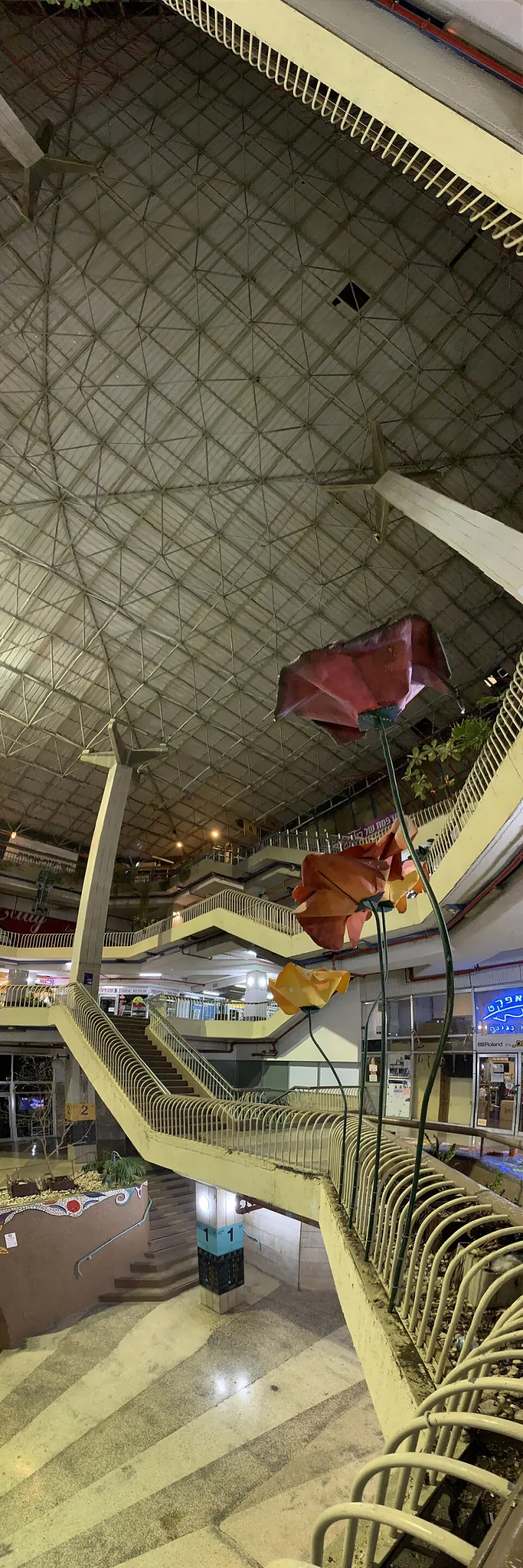
Photo: Yitzilitt, CC BY-SA 4.0, via Wikimedia Commons
The last thing a building loses, before it's gone entirely, is its sound.
Long after the lights are cut, after the fixtures are stripped and the floors buckle and the roof begins its slow negotiation with gravity, a space retains something acoustic — a particular way that air moves through it, that distant traffic filters in through broken windows, that footsteps land and scatter. Field recordist and experimental composer Jess Okafor has spent the better part of four years chasing exactly that. She's recorded in a defunct Sears in suburban Ohio, a shuttered Greyhound terminal in rural Louisiana, and the empty concourse of a regional airport in upstate New York that stopped receiving flights in 2019.
"Every space has a frequency signature," she says. "The dimensions, the materials, the damage — it all shapes sound in ways that are completely specific to that place and that moment. Once the building comes down, or gets renovated, that acoustic identity is gone. I'm trying to get it on tape before it disappears."
The Acoustics of Forgetting
There's a word that gets used a lot in this community: liminality. It describes spaces that exist between states — between use and abandonment, between memory and erasure. Dead malls. Closed factories. Emptied churches. Defunct transit infrastructure. America has a lot of these right now, scattered across the Rust Belt and the exurbs and the small towns that the interstate bypassed and the economy left behind.
For most people, these places register as eyesores, or as subjects for Instagram photography, or as symbols of a particular kind of national melancholy. For a loosely affiliated network of experimental musicians and sound artists, they represent something more specific: irreplaceable acoustic archives.
The physics here are real. A large, enclosed space with concrete floors and steel rafters — a factory floor, say — produces a reverb tail that can last several seconds. That reverb is shaped by the exact volume of the room, the porosity of the walls, the presence or absence of machinery, the gaps where windows used to be. It cannot be perfectly replicated in software. It cannot be reconstructed once the building is demolished. It exists only as long as the space itself exists.
"Reverb is basically a room's autobiography," says audio engineer and researcher Tom Delaney, who has consulted on acoustic preservation projects. "It tells you everything about the physical history of a place — what it was built from, how it was used, what happened to it. Recording in these spaces is a form of documentation that no photograph can replicate."
Into the Mall
Few American spaces have become more culturally loaded in the past decade than the dead mall. Once the beating heart of suburban consumer life, hundreds of regional malls across the country have shuttered since the early 2000s, leaving behind vast, echoing shells. For sound artists, they're extraordinary.
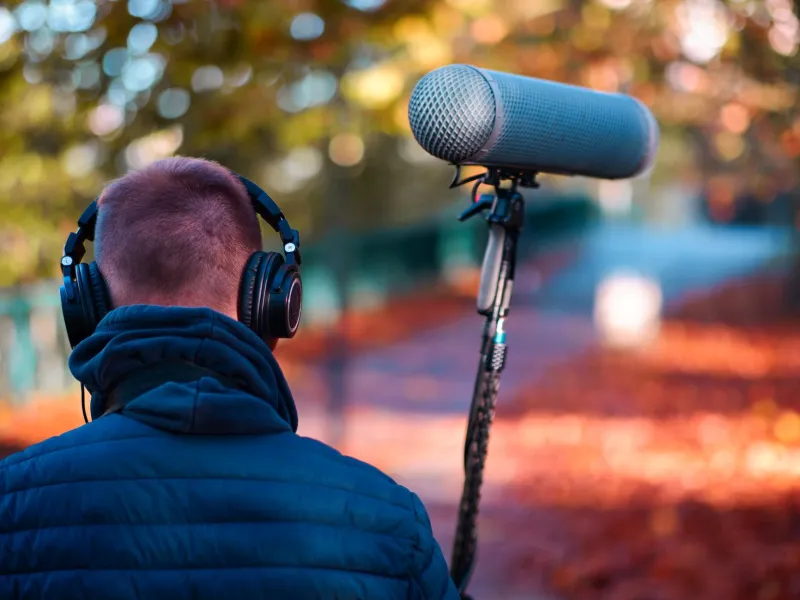
Composer and recordist Daniel Foss has made the dead mall something of a specialty. He travels to them with a portable rig — a pair of high-quality stereo microphones, a field recorder, and occasionally a speaker to test reverb characteristics — and spends hours capturing whatever the space offers. Dripping water. HVAC systems running on some forgotten timer. The muffled rumble of traffic through a skylight. His own footsteps, multiplied and scattered by acres of empty tile.
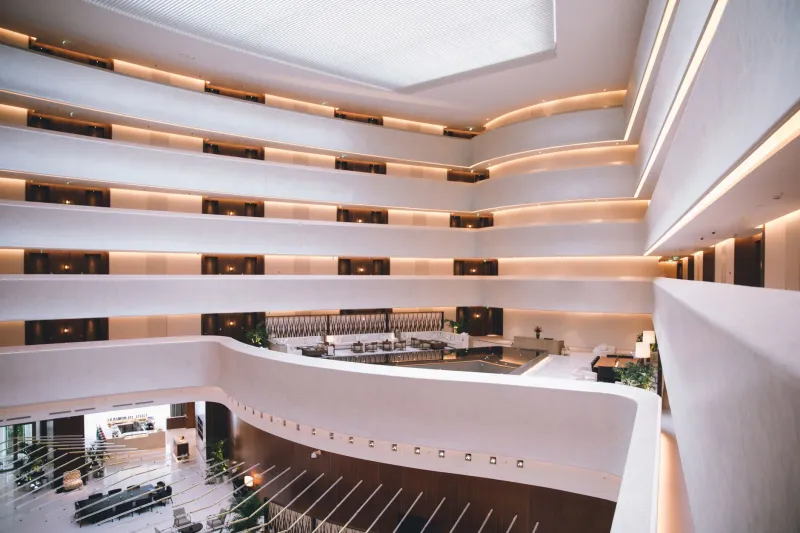
"There's this specific reverb you get in an atrium — this long, warm decay that kind of folds back on itself," he explains. "I've never heard it anywhere else. It's the architecture, the height, the fact that all the soft furnishings that used to absorb sound are gone. It's a room that's been acoustically transformed by its own emptiness."
Foss releases his recordings through a small Bandcamp label, packaged with GPS coordinates and architectural notes. They've found an audience that's part ambient music listener, part urban explorer, part preservation advocate. On forums where the Amblr community congregates, threads discussing his work tend to spiral into broader conversations about memory, place, and what it means to document something that's actively dying.
Sound as Preservation
The impulse behind this work connects to older traditions. Field recordists like Tony Schwartz in the mid-20th century understood audio as a way of preserving cultural and environmental textures that visual media couldn't capture. The Library of Congress has archived natural soundscapes for decades. Ethnomusicologists have long recorded the acoustic environments of communities alongside their music.
What's different now is the focus on built environments — specifically built environments in decline — and the explicit framing of the work as a response to loss.
Artist collective Low Signal, based out of Detroit, has spent three years systematically recording defunct industrial sites across the Midwest. Their project, which they describe as an "acoustic survey of deindustrialization," has produced dozens of hours of recordings from closed auto plants, shuttered steel facilities, and empty warehouses. They've partnered with local historical societies to have the recordings archived alongside more conventional documentation.
"We're not trying to make it beautiful, exactly," says collective member Rena Vasquez. "We're trying to make it true. The sound of a space that used to employ three thousand people and now employs zero — that's historical information. That should exist somewhere."
The Nostalgia Question
There's an inevitable tension in this work. Recordings of abandoned spaces are, almost by definition, aesthetically compelling — the reverb is interesting, the silence is textured, the accidental sounds are evocative. They circulate on ambient music platforms and get layered into drone compositions and find appreciative audiences. Which raises a question worth sitting with: is this preservation, or is it aestheticization of decline?
Jess Okafor thinks about this a lot. "I don't want to romanticize poverty or deindustrialization," she says carefully. "These aren't just pretty ruins. They're places where real economic devastation happened. I try to hold that in mind when I'm working."
Her most recent project attempts to address the tension directly. For recordings made in a shuttered textile mill in the Carolinas, she worked with former employees to record their spoken memories of the space — the sounds they remembered, the rhythms of the machinery, the acoustic texture of a full working day. Those testimonies are woven into the final piece alongside the field recordings, so the living memory and the dying echo exist together.
The result is something that resists easy categorization. It's not ambient music in the conventional sense. It's not oral history. It's not sound art, exactly. It's something that could only have emerged from a community that takes listening seriously enough to understand what's at stake when a sound disappears.
The buildings will come down eventually. The frequencies will go with them. But somewhere on a hard drive, in an archive, on a Bandcamp page with coordinates in the liner notes, the ghost of the room will remain — a few minutes of air moving through a space that no longer exists, preserved in the only way it could be.