The Last Quiet Places: Inside the Fight to Save America's Natural Soundscapes
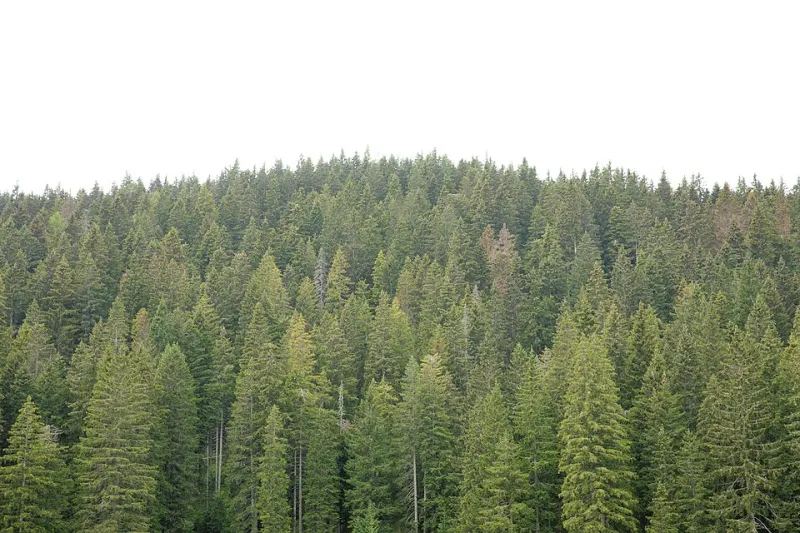
Photo: Jernej Furman from Slovenia, CC BY 2.0, via Wikimedia Commons
Stand at dawn in the backcountry of Olympic National Park's Hoh Rain Forest and you'll encounter something increasingly rare in the continental United States: a stretch of land where human noise is essentially absent for long enough that the ear recalibrates. Biologist Gordon Hempton famously designated a spot there — a mossy square of old-growth forest — as "One Square Inch of Silence," arguing that protecting even a tiny zone from man-made sound could radiate quiet across an entire wilderness area.
It sounds poetic. It's actually applied science, and it's under siege.
Why National Parks Have a Noise Problem
The National Park Service has understood the stakes since 2000, when it established Natural Sounds and Night Skies Division — yes, sound has a federal division — to monitor acoustic environments across more than 400 park units. The data those monitors collect is sobering. At measurement sites in popular parks, anthropogenic noise — aircraft, vehicles, generators, crowds — is audible during a substantial portion of daytime hours. In some corridors of Yellowstone and Yosemite, the natural soundscape is interrupted by aviation noise every few minutes during peak season.
The physics of why this matters is straightforward: sound travels farther in open natural landscapes than most visitors intuit, and it travels even farther in cold, still air. A single snowmobile can degrade the acoustic experience for visitors miles away. Aircraft are worse, because their noise footprint is measured in hundreds of square miles.
Noise Isn't Just Annoying — It's Ecological
Here's where the science gets urgent. Wildlife depends on sound for survival: predators locate prey by it, songbirds time their dawn choruses to it, and many species use acoustic channels for mating and alarm calls. Research on anthropogenic noise has documented birds shifting song frequencies, bats avoiding foraging areas near roads, and prey animals altering their vigilance behavior in chronically loud zones. In effect, noise pollution redraws habitat maps without moving a single tree.
For humans, the case is equally physiological. Studies on the restorative effects of natural soundscapes suggest that environments with low man-made noise measurably reduce stress markers and support attention recovery — the same mechanisms driving the broader interest in ambient listening, except here the "composition" is wind, water, and birdsong, performed live.
The Policy Fight Over Silence
The timely flashpoint: whether quiet itself deserves legal standing. The Clean Air Act protects air; the Clean Water Act protects water; no equivalent federal statute protects soundscapes. Regulation happens piecemeal — air tour management plans under the National Parks Air Tour Management Act, overflight agreements, voluntary quiet zones — and enforcement is chronically underfunded.
Advocates have floated everything from soundscape designations within park general management plans to wilderness acoustic standards, while industry groups counter that access and tourism economies depend on the very machines producing the noise. It's a genuine tension: the scenic flight over the Grand Canyon is someone's once-in-a-lifetime experience and someone else's ruined dawn chorus, simultaneously.
The Recordists in the Middle
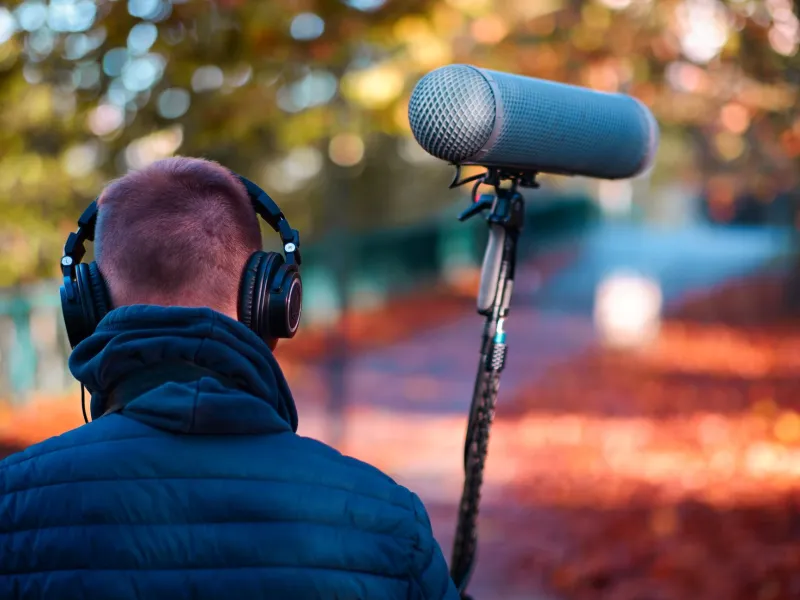
Caught in between are the field recordists — part artists, part citizen scientists — hauling parabolic microphones and 32-bit recorders into the backcountry to archive what's left. Their recordings now serve double duty: released as albums that top ambient listening charts, and submitted as baseline data in soundscape monitoring efforts. When a recording of a desert soundscape from 1998 is played next to one from 2024, the difference isn't nostalgia. It's evidence.
There's a strange loop here that ambient listeners will appreciate: the genre built on synthesizing calm is increasingly turning to the real thing, and the real thing is a diminishing resource. Every stream of a rainstorm recording is, in a sense, a stream of a wild soundscape that fewer people will ever stand inside.
What Protecting Quiet Actually Looks Like
The encouraging news is that quiet is recoverable. Parks that have implemented seasonal overflight restrictions, shuttle systems, and generator curfews have documented measurable improvements in soundscape quality within years, not decades. The Hoh's famous square inch still holds, mostly. The tools exist — monitoring, zoning, flight-path agreements. What's missing is the cultural consensus that silence is a resource worth managing.
The next time an ambient playlist helps you focus, consider that somewhere in the Hoh Rain Forest or the depths of Great Basin, the original version is playing live, unamplified, and free. It just needs someone to argue, in a courtroom or a comment period, that it's worth defending.