Silence Is a Zip Code: The Case for Treating Noise as a Public Issue
Photo: Shixart1985, CC BY 2.0, via Wikimedia Commons
Here's an uncomfortable thought for those of us who curate the perfect drift: the ability to need ambient music is, in itself, a kind of privilege.
Think about it. Ambient listening is often framed as an escape — a voluntary retreat from a loud world into a self-selected soundscape. But for millions of Americans, the noise never offered a choice in the first place. The highway hum, the flight path, the compressor station over the fence line: they don't get a mute button. They get earplugs, if they can afford the good ones.
Quiet, in other words, is not an aesthetic preference. It's an amenity. And like most amenities in this country, it's distributed by income.
The Geography of Quiet
The pattern is well documented. Research on urban noise mapping consistently shows that higher-traffic, higher-industrial noise burdens fall disproportionately on lower-income neighborhoods and communities of color. Highways were routed through them. Airports were built next to them. Warehouses and freight corridors were zoned into them.
Meanwhile, the quietest residential enclaves — the ones with tree canopy, setback requirements, and well-funded code enforcement — are precisely the places where residents have the political capital to keep it that way.
We spend a lot of words in ambient circles celebrating the aesthetics of quiet: the cathedral hush of a desert, the velvet of a well-treated listening room. We spend almost none asking why the hush was available to some people and not others.
The Policy Vacuum
Here's the part that should embarrass everyone: the federal government largely walked away from noise regulation decades ago. The EPA's Office of Noise Abatement was defunded in the early 1980s, leaving noise policy to a patchwork of state and municipal ordinances — some rigorous, some written in 1974 and never updated, some effectively unenforceable.
What remains is a landscape where your right to quiet depends entirely on where you live. Some cities measure and fine. Others log complaints into a void. The FAA decides how many Americans live under flight paths. Rail regulators set horn codes. Nobody, at any level, is responsible for the whole picture.
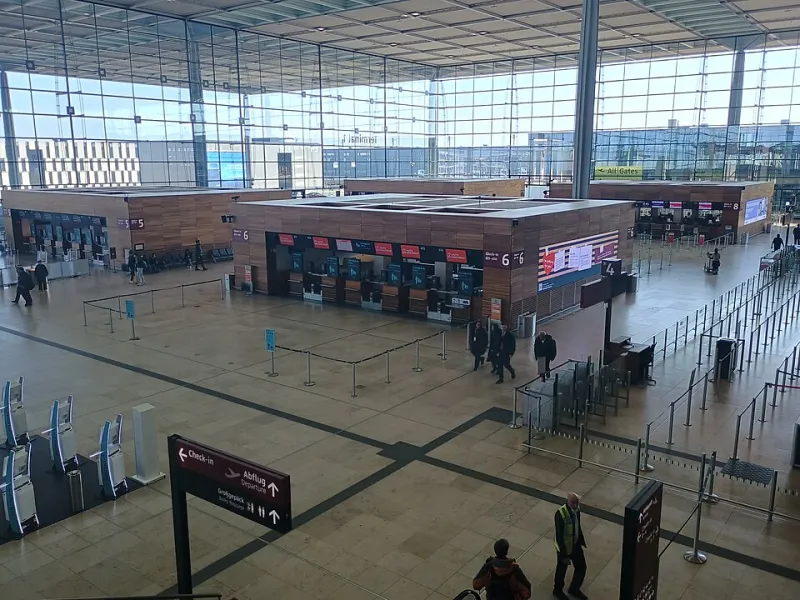
Into that vacuum, battles are flaring. Airport expansion fights from Denver to the New York suburbs pit growth against sleep. Residents near warehousing corridors are organizing against round-the-clock truck traffic. The right-to-quiet movement — long dismissed as a hobby for cranky homeowners — is increasingly overlapping with environmental justice organizing, because the noise burden map and the income map are, roughly, the same map.
Why Ambient Fans Should Care
I can already hear the objection: I listen to ambient because I love sound, not because I hate it. Fair. But consider what the genre has always claimed as its project — attention. Ambient composers spent decades teaching us to notice the texture of a room, the hum of a refrigerator, the grain of silence. That training shouldn't switch off at the property line.
There's also a self-interested argument. A country that treats noise as inevitable will never fund the quiet infrastructure — sound walls, buffer zoning, quiet pavement, enforced ordinances — that makes genuine listening possible for anyone who isn't rich. The natural soundscapes we celebrate, the last quiet places in national parks and prairies, are being eroded by the same policy indifference.
And there's a cultural argument. Ambient music grew out of an idea that listening is a form of care — of environment, of attention, of other people. It's hard to square that with shrugging at the neighborhoods that never got to choose their soundscape.
What Caring Actually Looks Like
This isn't a call to trade headphones for hearings. It's a call to widen the frame.
Support the local noise ordinance update — they're often the only acoustic policy on the ballot. Show up when an airport or freight route expansion is proposed in your region. Back the groups mapping urban noise as an equity issue. And when you celebrate a quiet place, ask who has access to it, and at what cost to whom.
Silence, like clean air, is a common good that erodes quietly — pun unavoidable — until someone fights for it. Ambient listeners, of all people, should hear it coming.